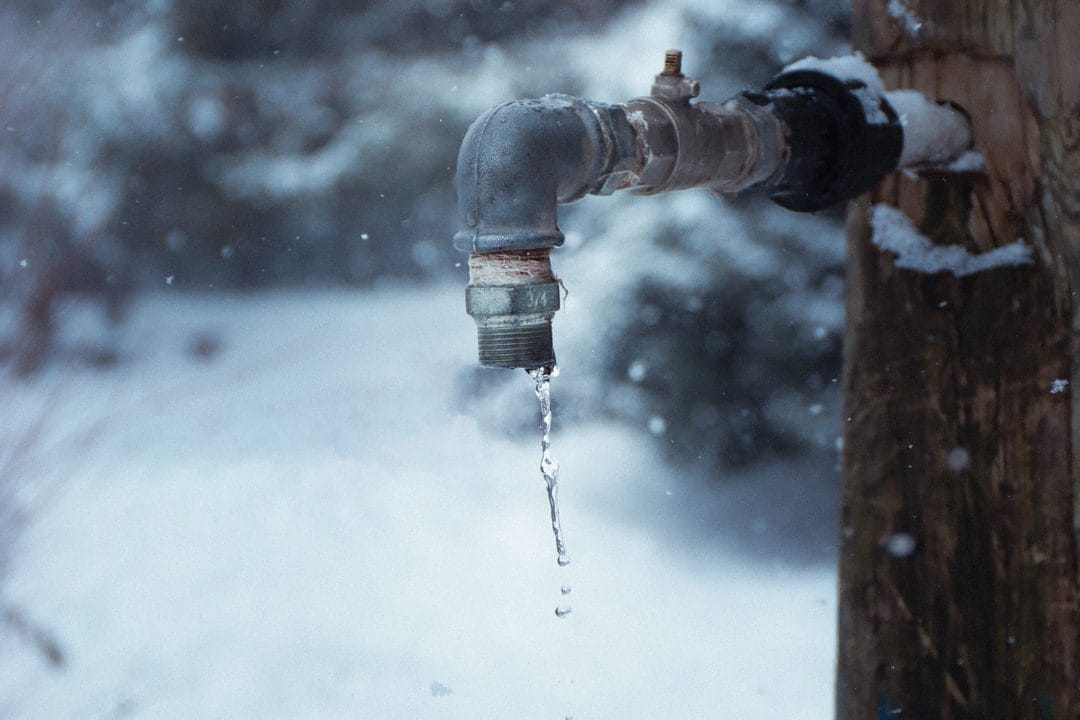
Most people find out where their stopcock is at half past ten on a Sunday night, torch in one hand, phone in the other, water coming through the kitchen ceiling. A frozen and then burst pipe is one of the most common winter insurance claims in the UK — the Association of British Insurers puts the average escape-of-water claim at somewhere between £6,000 and £8,000 once you include drying out the property, re-plastering and replacing flooring. The frustrating part is that the fix that would have prevented it usually costs under £50 and takes an afternoon. September and October are the window to do this properly, not December. Once the first hard frost hits, you're doing emergency repairs in freezing weather instead of a calm bit of prep with a mug of tea on the go. This guide covers the outdoor taps, exposed pipework, stopcocks and condensate pipes that actually fail every winter, what it costs to protect them properly, and where the job genuinely needs a Gas Safe engineer or a qualified electrician rather than a determined amateur.
Find your stopcock now, not during a flood
Every home has an internal stopcock — usually under the kitchen sink, sometimes in a downstairs cupboard, occasionally (annoyingly) boxed in under stairs by a previous owner who never expected anyone to need it in a hurry. Find it today. Turn it clockwise a quarter turn and back, just to confirm it actually moves — a stopcock that's seized from disuse is no use to anyone when a pipe has already let go behind a wall.
There's also an external stopcock, normally under a small metal or plastic cover near the boundary of your property, sometimes under the pavement or a neighbour's verge. This one belongs to the water company, but you're allowed to operate it, and it's worth knowing where it is if the internal one fails or the leak is between the meter and the house. If you can't find it, most water companies — Thames Water, Severn Trent, United Utilities — will tell you the approximate location from your account online within a few minutes.
Label it
A £2 luggage tag from B&Q or Wickes tied to the stopcock, with "MAIN STOPCOCK — TURN CLOCKWISE TO SHUT" written on it, saves precious minutes when it's 2am and you're not thinking clearly. It sounds unnecessary until you're the one fumbling under the sink in the dark.
Lagging outdoor taps and exposed pipework
Outdoor taps are the single most common failure point, because they're the one piece of plumbing that sits outside the thermal envelope of the house all winter with water still sitting in the pipe behind them. An outdoor tap jacket — a padded foam or fabric cover that straps over the tap — costs around £6–£12 at Screwfix or Wickes and takes thirty seconds to fit. Buy two if you've got taps on opposite sides of the house; it's a false economy to protect one and leave the other bare. Pipe lagging matters just as much, and it's the step people skip because it's less visible than the tap itself. Any exposed pipe running through a garage, an unheated utility room, a loft, or along an external wall needs foam pipe insulation sleeves, sold by the metre at Jewson or Travis Perkins for roughly £1.50–£3 per linear metre depending on the pipe diameter. Measure your pipe's outer diameter before buying — 15mm and 22mm are the two sizes you'll meet in nearly every UK domestic system, and the wrong-sized sleeve either won't fit or won't seal properly at the seam.
If you've got a genuinely exposed run — a pipe feeding an outbuilding, a static caravan connection, or anything that regularly drops below freezing for days at a time — foam lagging alone often isn't enough. Self-regulating electric trace heating cable, wrapped along the pipe under the insulation, keeps the water itself just above freezing regardless of the air temperature outside. It's a genuinely good solution for the handful of pipes that fail every single year no matter how well they're lagged.
The bit that's actually an electrical job
Trace heating cable runs off mains electricity, and running a new circuit or spur to power it outdoors falls under Part P of the Building Regulations — the work has to be notified or carried out by a competent person, and the installation needs to meet BS 7671 wiring regulations for outdoor and damp-location circuits. Don't wire this one in yourself off an extension lead through a window. A registered electrician will typically fit a thermostatically-controlled trace heating kit for £150–£300 depending on cable length, and it's money well spent on a pipe that's frozen three winters running.
Don't forget the condensate pipe on your boiler
This is the one that catches out condensing boiler owners every single winter, and it's rarely mentioned alongside the more obvious outdoor taps. Modern condensing boilers — which is to say, every boiler installed in the UK since 2005 — produce acidic condensate that drains out through a small plastic pipe, often routed externally to an outside drain. When that pipe freezes, the condensate backs up, the boiler senses a blockage and locks out with a fault code, and you wake up to no heating and no hot water on the coldest morning of the year.
The fix is the same principle as any other exposed pipe: lag it with purpose-made condensate pipe insulation, sold as a kit for around £15–£20 at Screwfix, and ideally reroute the pipe internally if it's a straightforward job — a Gas Safe registered engineer can assess whether the external run can be shortened or moved during a routine boiler service, which most people are booking in September and October anyway ahead of the heating season. If your boiler does lock out from a frozen condensate pipe, pouring warm (never boiling) water over the exposed section, from the outside in towards the boiler, usually clears it without needing an engineer call-out.
Insulating this pipe properly also ties into Part L of the Building Regulations, which sets minimum standards for pipe insulation on new installations to cut heat loss — the same insulation that saves energy in summer is what keeps the condensate liquid in winter. It's one of the few jobs on this list that pays for itself twice over.
Outbuildings, sheds and unheated extensions
A shed, garden office or unheated extension with its own water supply — a garden tap feed, an outdoor kitchen, a converted outbuilding with a basic bathroom — needs a different approach entirely if it's going to sit empty and unheated for weeks at a time over winter. The safest option is to isolate the supply at a dedicated stopcock and drain the pipework down completely, opening the taps at the lowest point until no more water comes out. An empty pipe can't burst from freezing, however cold it gets.
If the space is used regularly through winter rather than mothballed, that's not practical, and you're back to lagging plus a low-level frost thermostat on a small heater — a basic tubular heater with a built-in frost stat costs around £25–£40 from Screwfix and only kicks in below about 5°C, so it's not running (and costing you money) most of the time. Whichever route you take, don't just leave an unheated outbuilding's pipework as-is over winter and hope for the best; that's how a shed with a cracked pipe turns into a shed with a swimming pool by February.
DIY versus calling someone in
Lagging a tap, wrapping exposed pipework in foam sleeves and labelling your stopcock is a genuinely good Saturday-morning DIY job — none of it requires special tools beyond a pair of scissors and maybe some duct tape, and the total spend for an average semi-detached house rarely tops £60–£80 even buying everything new from Wickes or B&Q. Do this yourself; there's no reason to pay a tradesperson £150+ in call-out and labour for something that's this straightforward.
Trace heating cable installation and anything involving rerouting boiler pipework, on the other hand, is not a job to save £150 on by doing it yourself. Get it wrong and you're either looking at an electrical fault in a damp outdoor location or a boiler that's been incorrectly modified and voids its warranty — both considerably more expensive than the call-out fee you were trying to avoid. Book a Gas Safe engineer for the boiler side and a registered electrician for anything involving trace heating, and treat the rest of this list as the DIY half of winter prep.
What actually happens if you skip all of this
Water expands by around 9% as it turns to ice, and it's not usually the moment of freezing that causes the burst — most pipes crack quietly while frozen and then fail catastrophically during the thaw, when the ice plug melts and full mains pressure hits a pipe that's already split. That's why so many "burst pipe" emergencies happen on the first mild day after a cold snap, not during the cold snap itself, which catches a lot of homeowners off guard when they think they've got away with it.
Check your buildings insurance policy while you're at it. Most UK insurers require "reasonable steps" to prevent frost damage — maintaining heating at a minimum temperature if the property is left empty, for instance — and a claim can be reduced or refused if an insurer decides those steps weren't taken. Spending an afternoon with a lagging jacket and a few metres of Jewson pipe insulation isn't just cheap; on some policies, it's the difference between a covered claim and a rejected one.