The Best Weekend DIY Projects That Add Real Value to Your Home
Not every home improvement project requires a builder, a big budget, or a week off work. Some of the most effective improvements — the ones that make a house feel more finished, more comfortable, and genuinely worth more money — can be done on a Saturday afternoon with a trip to B&Q on the way home from the supermarket.
Here are the weekend DIY projects that deliver the best return, whether you're improving to sell or just improving to enjoy.
1. Refresh All the Paintwork (1–2 Weekends)
Fresh paint is the single most cost-effective thing you can do to a property. A tired, scuffed hallway with yellowing woodwork signals neglect to a prospective buyer — and to anyone living there — whereas a freshly painted hall with crisp white woodwork feels clean, cared for, and well maintained.
Materials cost: around £80–150 for walls, ceiling, and woodwork in a standard hallway (Dulux or Crown mid-range emulsion and gloss). Time: a weekend if you're reasonably methodical about prep.
The key to a professional finish is prep, not paint. Fill all cracks and holes with Polycell fine surface filler, sand smooth when dry, wipe down with a damp cloth, and apply a coat of mist coat (diluted emulsion, 5 parts paint to 1 part water) to new plaster or bare walls. Don't skip the primer on bare wood either — gloss applied to unprimed wood will peel within a year.
2. Replace Dated Light Fittings (Half a Day)
Swapping out brown plastic ceiling roses, yellowed switches, and tired pendant lights for modern equivalents is one of the highest-impact, lowest-cost improvements you can make. A brushed steel or matt black light fitting from B&Q costs £20–40. A set of satin chrome sockets and switches for a room runs to £30–50 from Screwfix.
Changing light fittings is Part P notifiable in England and Wales — which sounds alarming, but replacing a like-for-like ceiling pendant or wall switch doesn't require notification to the council provided the circuit is not in a kitchen or bathroom. Always isolate the circuit at the consumer unit before touching any wiring.
The visual difference between a room with a matching set of modern switches, sockets, and ceiling fitting versus a room with mismatched 1990s plastic is remarkable. It's one of those changes that makes a room feel twice as expensive for a fraction of the cost.
3. Lay New Tiles in the Hallway (Weekend)
Hallways take enormous punishment. If yours has tired carpet, cracked quarry tiles, or worn vinyl, replacing it with porcelain or ceramic tiles transforms the first impression of your home. Porcelain tiles are robust, easy to clean, and look excellent — and laying a modest-sized hallway (say 6–8m²) is a manageable weekend project for a careful DIYer.
Tile prices vary enormously, from around £12/m² for basic ceramics at Wickes up to £50+/m² for large-format porcelain. For a first tiling project, 30×30cm or 60×60cm tiles are the most forgiving. Budget around £100–200 in materials for an average hallway. The key tools are a tile cutter (hire from HSS or buy a basic manual cutter for £20), notched trowel, grout float, and a spirit level.
4. Add a Garden Room or Shed Base (Weekend)
If you're planning to add a garden room, office, or substantial shed, laying a proper concrete or paving slab base is a weekend project that significantly adds value — both to the structure itself and to the property. A shed or cabin sitting on bare earth will rot from the bottom. One sitting on a level, drained base will last decades.
For a base up to about 3×4m, you can lay 50mm concrete on 100mm hardcore (recycled concrete aggregate from a local builder's merchant is cheap and excellent for this). Hire a small cement mixer from Wickes Tool Hire for around £35 per day. Total materials for a 3×4m base: roughly £200–300.
5. Install Under-Cabinet Lighting in the Kitchen (Half a Day)
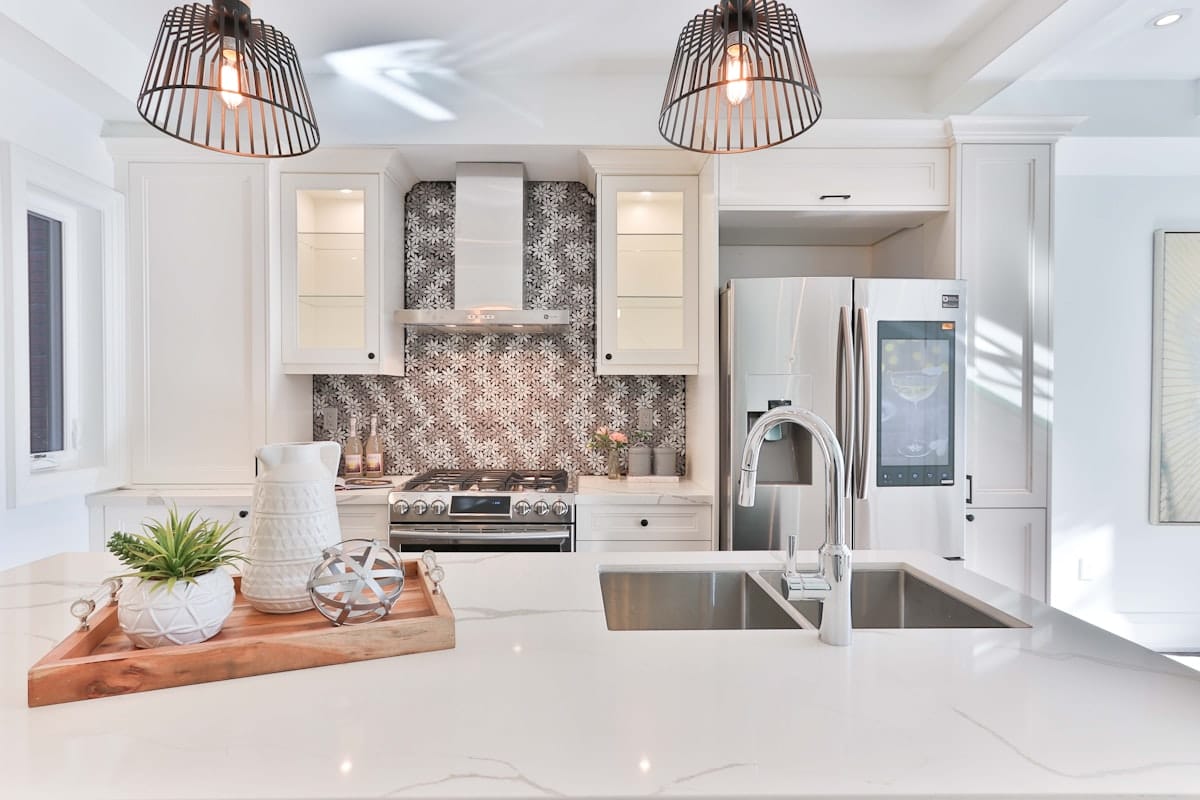
LED strip lighting under kitchen wall units is one of those improvements that immediately makes a kitchen look like it belongs in a magazine, rather than a house in 2004. It costs around £30–50 in materials (LED strip, driver, connectors) and takes a Saturday morning to install. The wiring is low voltage (12V or 24V DC) and doesn't fall under Part P notification requirements.
Go for warm white (2700–3000K) if you want a cosy, ambient feel, or cool white (4000K) if you want a crisp, functional worktop light. The Philips Hue Lightstrip and IKEA Tradfri systems offer smart dimming if you want to go further, but basic non-smart LED strip from Amazon or Screwfix works perfectly well for most kitchens.
6. Fix or Replace Skirting Boards and Door Architrave (Weekend)
Skirting boards and door frames (architrave) are one of those things you stop noticing when they're good and immediately notice when they're not. Cracked, poorly joined, or painted-over skirting with visible gaps to the floor creates a sloppy impression even in an otherwise well-decorated room.
MDF skirting at 95mm or 119mm height (a generous size that looks in proportion in standard UK rooms) costs around £1.50–3 per metre from B&Q or Wickes. Cutting accurate mitres requires a mitre saw (hire for £20–30 or buy a basic one for £60 from Screwfix). The whole project for a typical living room should take a Saturday and cost £50–80 in materials.
7. Pressure Wash the Exterior (Half a Day)
A pressure washer on the driveway, paths, patio, and external walls costs nothing but time if you already own one — and transforms a tired exterior into something that looks genuinely cared-for. Hire a good petrol-driven pressure washer from HSS Hire for around £55 per day, or buy an electric Kärcher K5 or Bosch AQT 45 for around £150 if it's a regular job.
Clean the driveway, paths, garden walls, window sills, fascias, and gutters. Clear the gutters while you're at it — blocked gutters cause damp ingress and are the source of many larger problems. The whole exterior can be transformed in a morning.
8. Install New Door Hardware Throughout (Half a Day)
Every door handle, hinge, letterbox, knocker, and house number in your property is a chance to make the house feel considered and well-finished — or cheap and mismatched. A complete set of lever handles for five internal doors costs £40–80 from Screwfix depending on finish (satin chrome and matt black are both currently on trend). Swap out the front door furniture — handle, knocker, number — for a matching set and the front elevation looks immediately sharper.
Most door handles are fitted with a single M5 machine screw; the whole job requires a screwdriver and half an afternoon.
The Bottom Line
These eight projects share a common characteristic: they disproportionately affect how a property feels relative to their cost. Fresh paint, good lighting, clean hardware, and tidy detail work signal to anyone entering your home that it's been looked after — and that feeling translates directly into buyer confidence and, when the time comes, sale price. None of them require a builder. None require planning permission. And all of them can genuinely be done in a weekend.