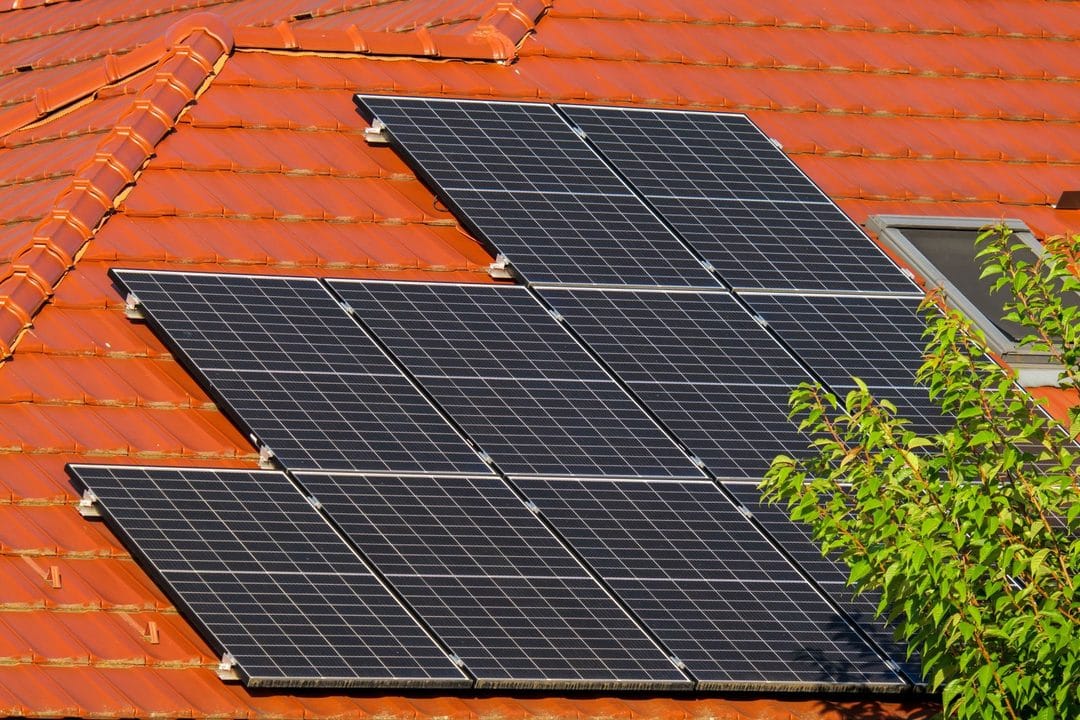
Look along most streets built after 1990 and you'll spot at least one roof that's changed in the last two years — bare tiles replaced by a dark grid of panels, usually installed on a Tuesday by a van with a company name most homeowners had never heard of before they got a leaflet through the door. The reason isn't mysterious. Electricity unit prices have stayed stubbornly high since the 2022 crisis, and the government's 0% VAT rate on residential solar installations — in place since April 2022 and currently scheduled to run until March 2027 — knocks a genuine chunk off the upfront cost. But there's a wide gap between "worth having" and "worth signing whatever the first salesman on your doorstep puts in front of you," and that gap is where most of the expensive mistakes happen.
What a Typical Installation Actually Costs
A standard 3.5kW system, enough to cover a decent slice of daytime usage in a three-bedroom semi, runs somewhere between £5,000 and £7,000 fully installed as of 2026, including scaffolding and the inverter. Step up to a 4–5kW array for a larger house and expect £7,500 to £10,000. Add a 5kWh battery — the point where most households start seeing real evening and overnight savings rather than just daytime offset — and you're looking at another £3,000 to £5,000 on top. None of these figures include the export income you can earn back through the Smart Export Guarantee, which typically runs between 4p and 15p per kWh depending on the supplier and tariff you pick, so payback periods vary hugely and anyone quoting you a single fixed number without asking about your usage pattern is guessing. Payback for a panels-only system without a battery generally lands somewhere between eight and twelve years on a typical semi with reasonable roof orientation. South-facing roofs with no shading from trees or neighbouring extensions perform noticeably better than east- or west-facing ones — a difference of 15–20% in annual generation is common, and it's the single biggest factor installers gloss over in a glossy sales brochure. If your roof faces north, or if a two-storey extension next door throws shade across it from midday onwards, ask for a shading assessment before you commit to anything. A good installer will use a tool like a Solar Pathfinder or app-based shading survey during the site visit rather than eyeballing it from the garden.
Permitted Development or Full Planning Permission?
On most houses, rooftop solar panels count as permitted development and don't need planning permission at all. The rules require that panels project no more than 200mm from the roof slope, that they don't sit higher than the highest part of the roof excluding the chimney, and that on a flat roof they don't rise more than 1 metre above the highest point. Ground-mounted arrays have their own size limits — no more than 9 square metres or 3 metres in height, and they must sit at least 5 metres from the property boundary.
When You'll Actually Need to Apply
- Listed buildings always need listed building consent, regardless of how discreet the installation looks
- Conservation areas sometimes carry an Article 4 direction removing permitted development rights — check with the local planning authority before ordering anything
- Panels facing a road and projecting more than 200mm from the roof slope
- Flats and maisonettes almost always need planning permission, since permitted development rights for solar only apply to houses, and so on for a handful of rarer edge cases a quick call to planning can settle
Get this wrong and you're not just risking a fine — mortgage lenders and future buyers' solicitors will ask for proof of lawful development during a sale, and an unauthorised installation can genuinely hold up a house sale years later.
MCS Certification Isn't Optional Paperwork
Use an installer certified under the Microgeneration Certification Scheme. Without an MCS certificate for both the installer and the specific installation, you can't register for the Smart Export Guarantee, and a growing number of home insurers now ask for it before they'll cover a claim involving fire or storm damage to the array. Some mortgage lenders have started requesting MCS paperwork during remortgage valuations too, which is a detail almost nobody mentions until it becomes a problem at exactly the wrong moment. Check any installer's MCS number directly on the mcscertified.com database rather than trusting a certificate photograph in a sales pack — certificates get shared between subcontractors more often than the industry likes to admit.
Choosing an Installer Without Getting Burned
Get three quotes minimum, and treat any installer who pressures you to sign on the day — "this price is only valid until Friday" — as a reason to walk away, not a reason to hurry. Which? has flagged doorstep solar sales repeatedly over the past few years for exactly this tactic, alongside inflated "before" prices designed to make a discount look bigger than it is. A legitimate quote should break down panel brand and wattage, inverter make and model, scaffolding cost, and the electrical certification separately, not bundle everything into one round number. Ask specifically whether the installer is TrustMark-registered as well as MCS-certified — TrustMark covers the quality of the building work itself, MCS covers the technical installation standard, and having both matters if something goes wrong two years in and you need to make a claim under any government-backed guarantee scheme. Avoid anyone who only offers finance through a single lender tied to the sale; those loans regularly carry interest rates well above a standard personal loan, even when they're marketed as "0% APR" with the cost simply folded into a higher headline price instead. And if a salesman brings up a "limited time government grant" that just happens to match his discount exactly, treat it as a script, not news — most of the genuine schemes are boring, well-publicised, and don't need a stranger on your doorstep to explain them to you.
The Roof Itself: What to Check First
Panels are rated for 25 years or more. Your roof covering needs to outlast that comfortably, because taking an array down and reinstalling it to replace failed tiles underneath can cost nearly as much as a fresh installation. If your roof covering is already 20-plus years old, or you've had recurring leaks, get a roofer's opinion before the solar quote, not after. Loft space matters too — most inverters and battery units get wall-mounted in the loft or garage, so check there's room, ventilation, and reasonable access before assuming the installer's standard layout will fit your house.
Battery Storage: Worth Adding at the Same Time?
Skip it, in most cases, unless you're moving onto a time-of-use tariff or specifically want backup power during outages.
That's the blunt version, and it holds for most households on a flat-rate tariff, where a battery mostly just stores your own daytime generation for evening use — useful, but rarely enough to justify another £3,000–£5,000 on top of the panels within a sensible payback window. The calculation flips if you're on (or planning to move to) a time-of-use tariff like Octopus Agile or Intelligent Octopus Go, where charging the battery from cheap overnight rates and using it through the expensive evening peak can meaningfully shorten the payback period. It also flips if power cuts are a genuine concern in your area — a battery with backup functionality will keep essential circuits running, though only specific inverter and battery combinations support this, and it needs specifying at the design stage, not bolted on afterwards.
The Electrical Side: G98, G99 and Part P
Every grid-connected solar installation needs notification to your local Distribution Network Operator under Engineering Recommendation G98 for smaller systems, or G99 with prior approval for larger arrays. A competent installer handles this as standard, but it's worth asking who's submitting the notification and confirming it's done before the system goes live — an unregistered connection can cause problems if the DNO later needs to do maintenance work on the local network. The final electrical connection also falls under Part P of the Building Regulations and must meet BS 7671 wiring standards; a properly certified installer will issue a Building Regulations compliance certificate through their competent person scheme rather than leaving you to notify building control yourself.
Selling a House With Solar Panels Already Fitted
Panels generally add value at resale, and a stronger EPC rating helps on the open market — but only if the paperwork trail is complete. Buyers' solicitors routinely ask for the MCS certificate, the DNO notification confirming G98 or G99 registration, the Building Regulations compliance certificate, and any panel or inverter warranty documentation before exchange. Dig out the folder now, while you still know where everything is, rather than leaving it for whoever owns the house next to chase down an installer who may no longer trade under the same name.
There's one genuine trap worth naming directly: "rent-a-roof" schemes from the early-to-mid 2010s, where a third-party company owned the panels outright and simply leased your roof space in exchange for free electricity. Those arrangements are still attached to a fair number of older houses, and they can stall a sale for months while solicitors untangle who actually owns the equipment and whether the lease transfers automatically to a new owner. If you're buying a house with existing panels rather than installing your own, ask this question before you get anywhere near an offer — not during the survey.
Maintenance: Less Than You'd Think
Rain does most of the cleaning panels need, and in the UK's climate that's usually enough on its own to keep performance within a few percent of optimal. Bird fouling and heavy pollen near trees are the main reasons anyone needs an actual clean, and a soft brush with an extendable pole handles that from ground level without needing to get on the roof at all. The one component that reliably needs attention is the inverter, which typically lasts 10 to 15 years against the panels' 25-year rating — budget £800 to £1,500 for a replacement around year twelve, and treat any installer who claims the inverter will last as long as the panels with a healthy dose of scepticism.